Reet and Toomas Mae’s parents fled Estonia during the Great Escape of 1944, when tens of thousands of Estonians were forced to make life-changing decisions in a matter of moments as Soviet forces advanced. Like many families, that decision shaped generations to come. Reet and her sister Mari were born in Sweden, while Toomas was later born in Canada. Over the past decade, the siblings have worked together to collect and preserve diaspora stories so that these memories are not lost.
Among the donated objects is a set of children’s folk costumes that reflects how Estonian cultural traditions were kept alive far from home. Reet Mae described the donation in her own words: “I thought Vabamu would be the best home for these items because they beautifully show how we tried to preserve our homeland while living abroad.”
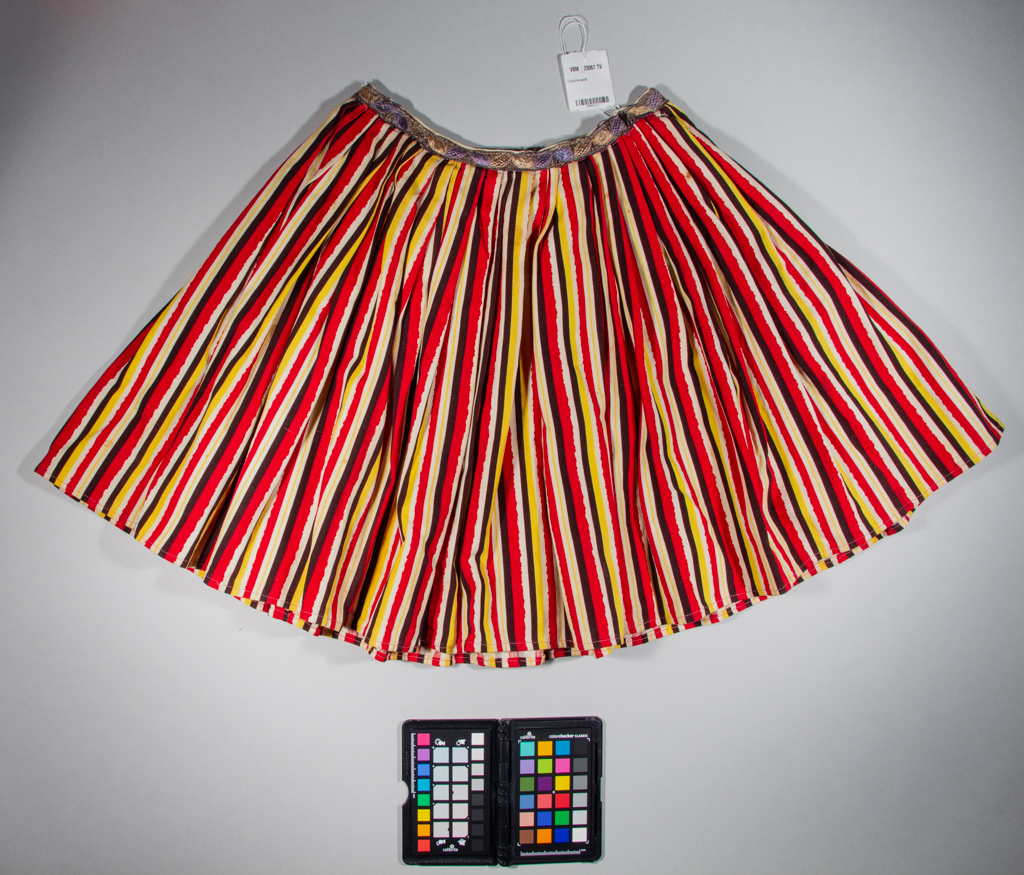
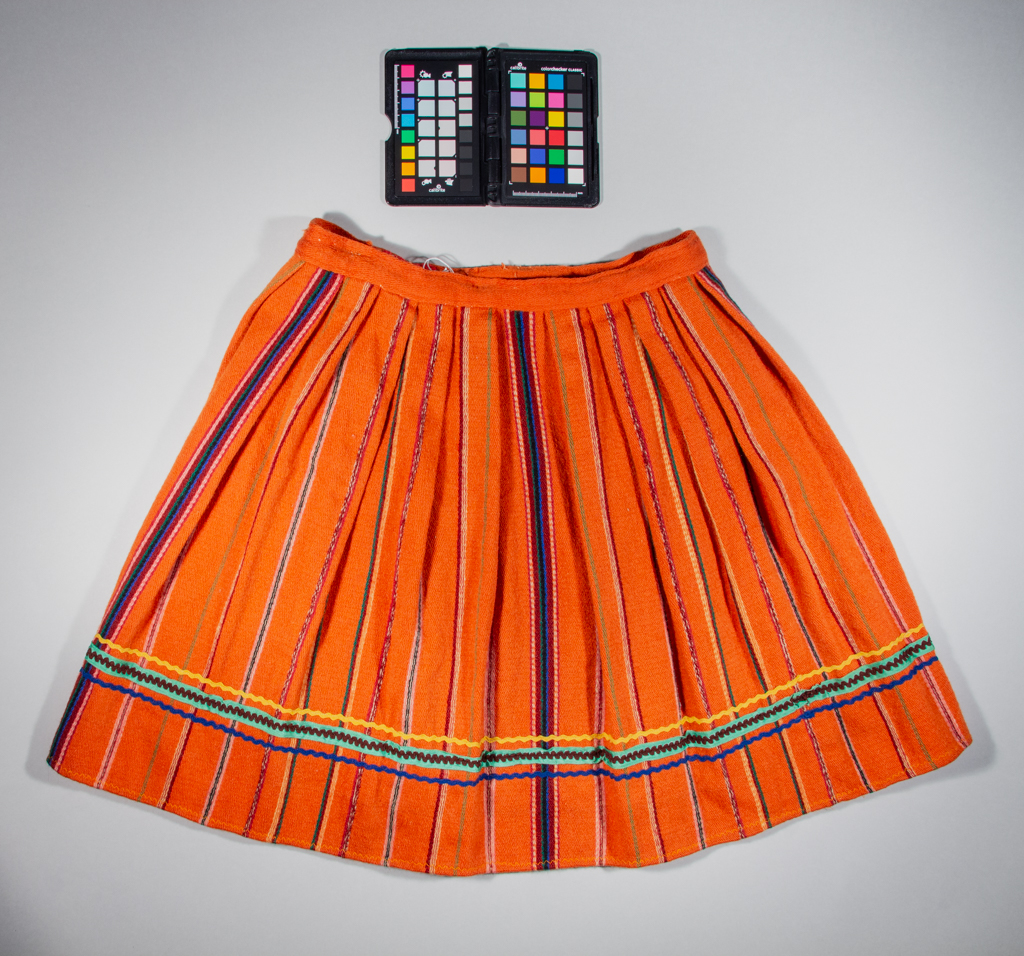
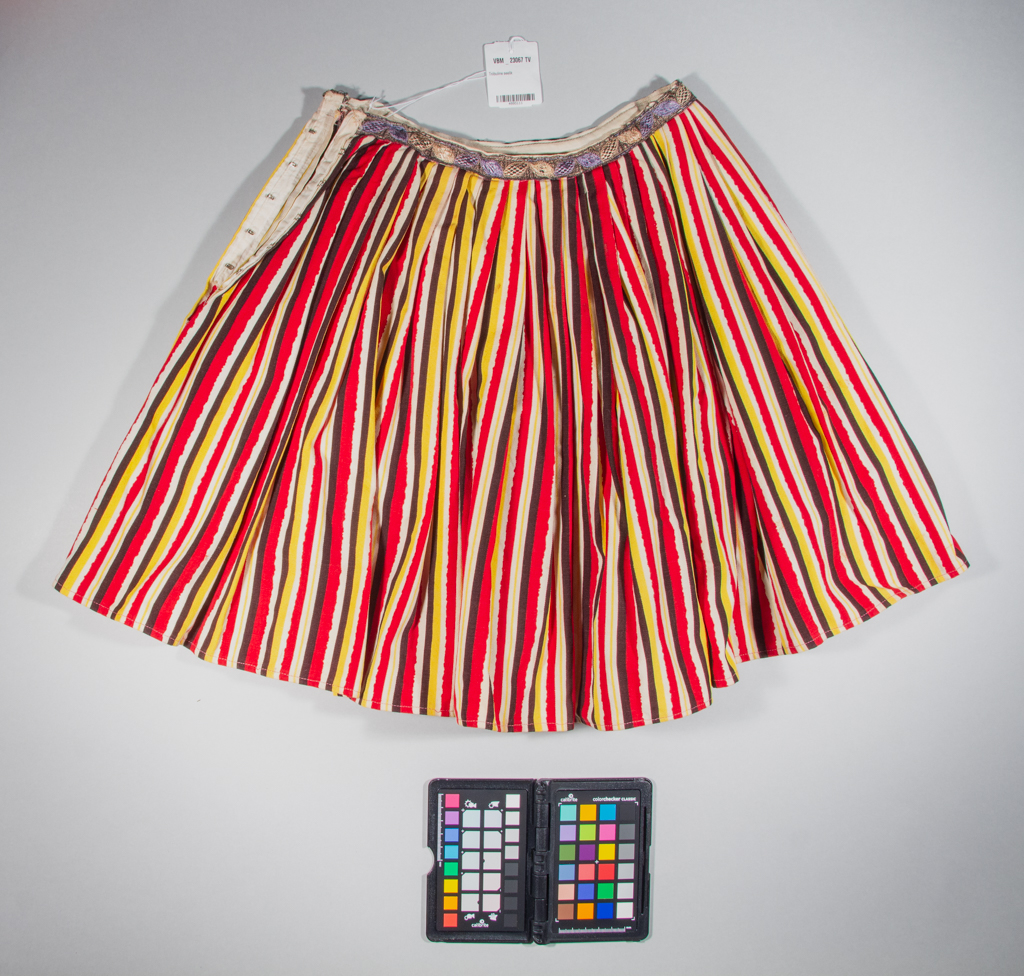
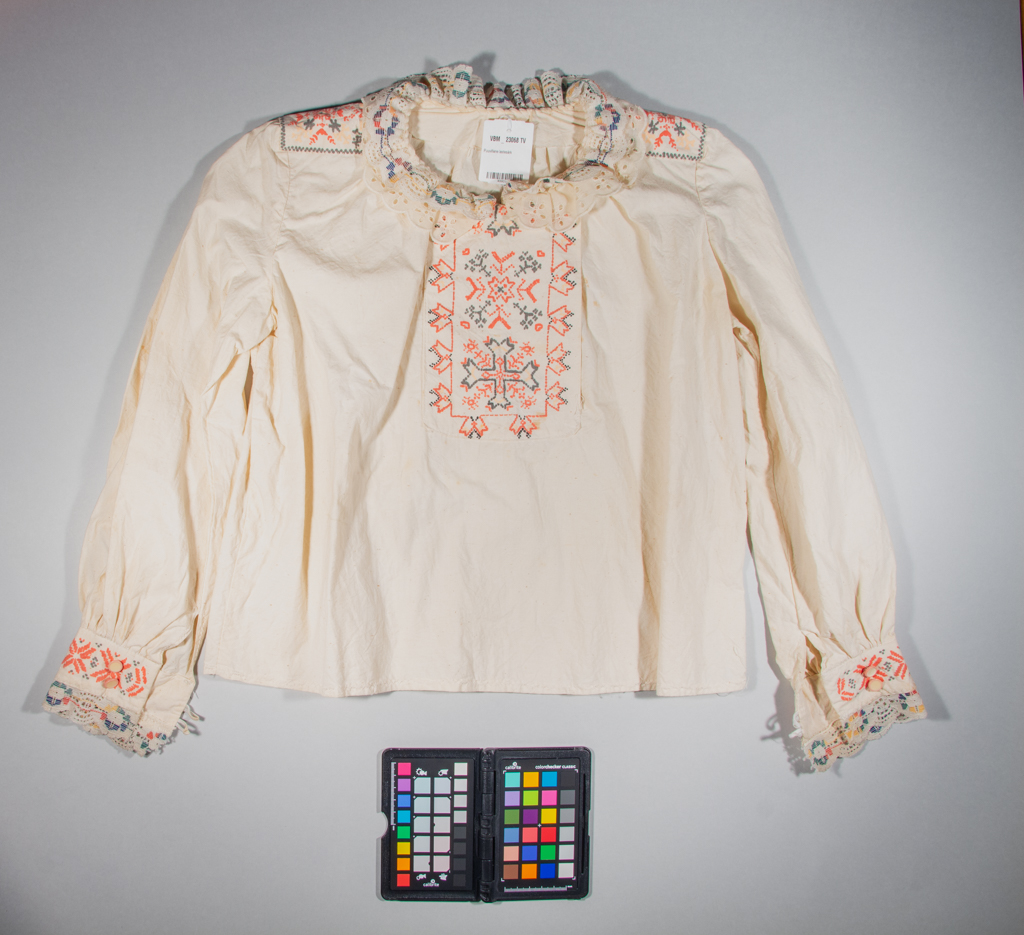
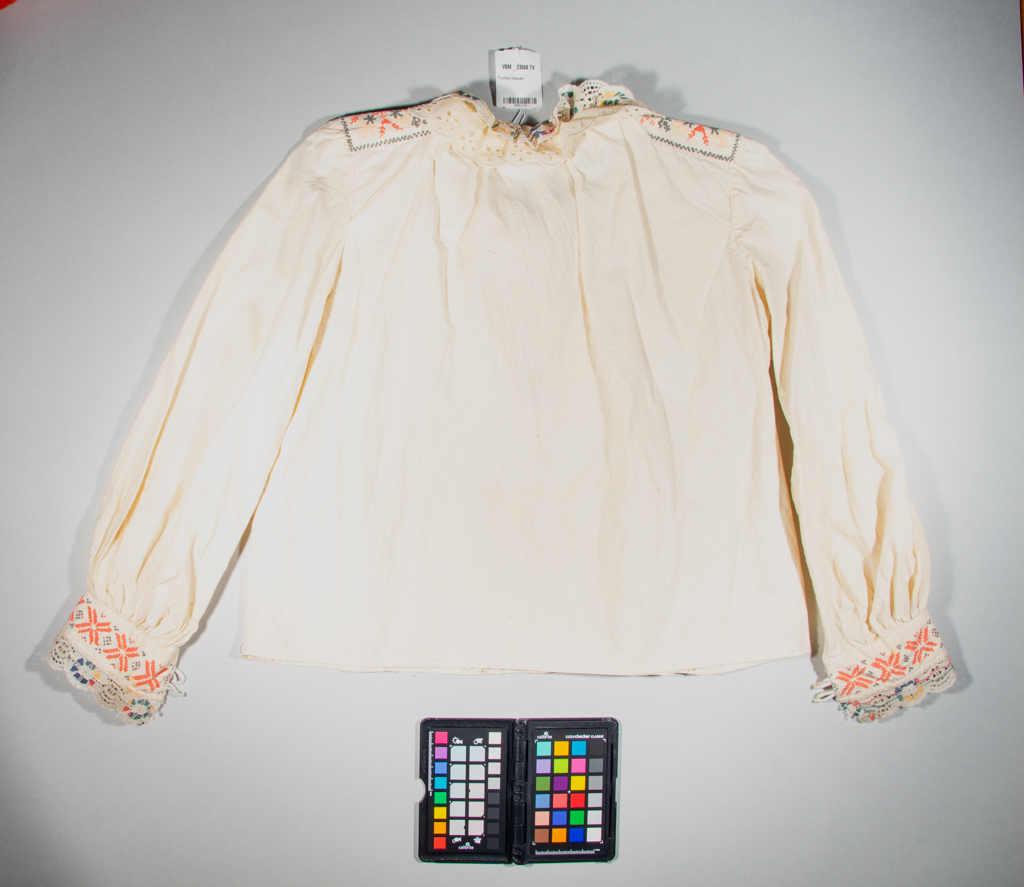
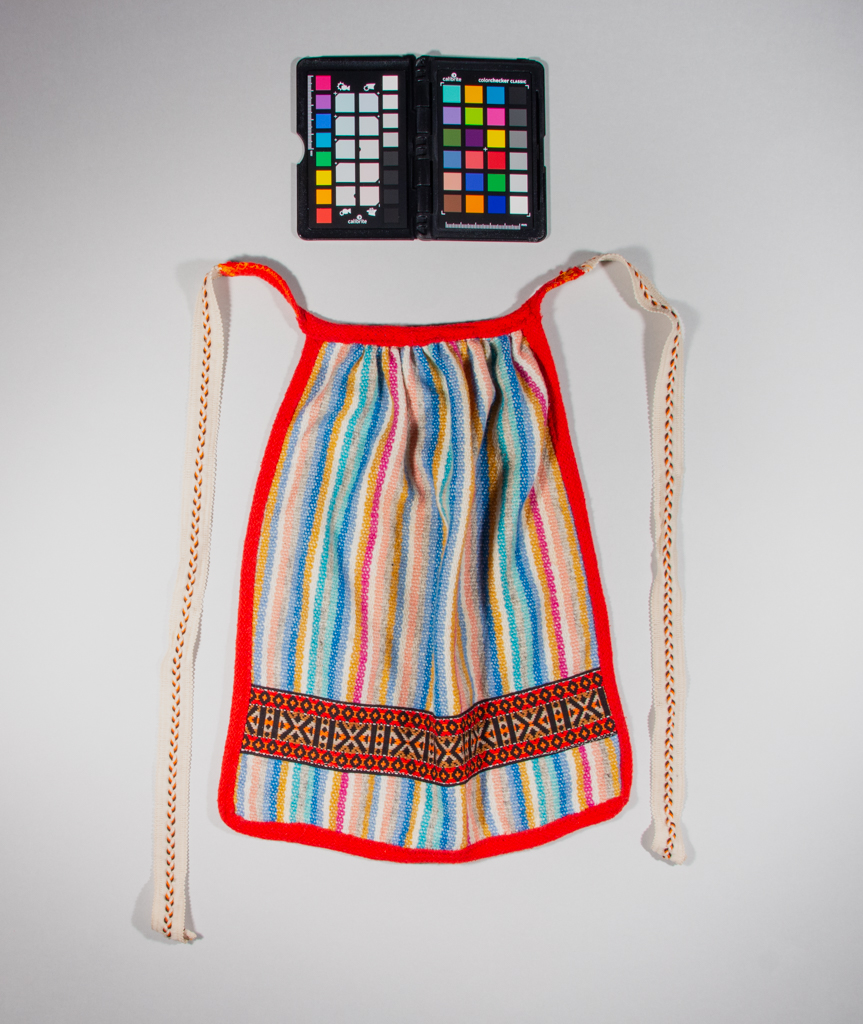
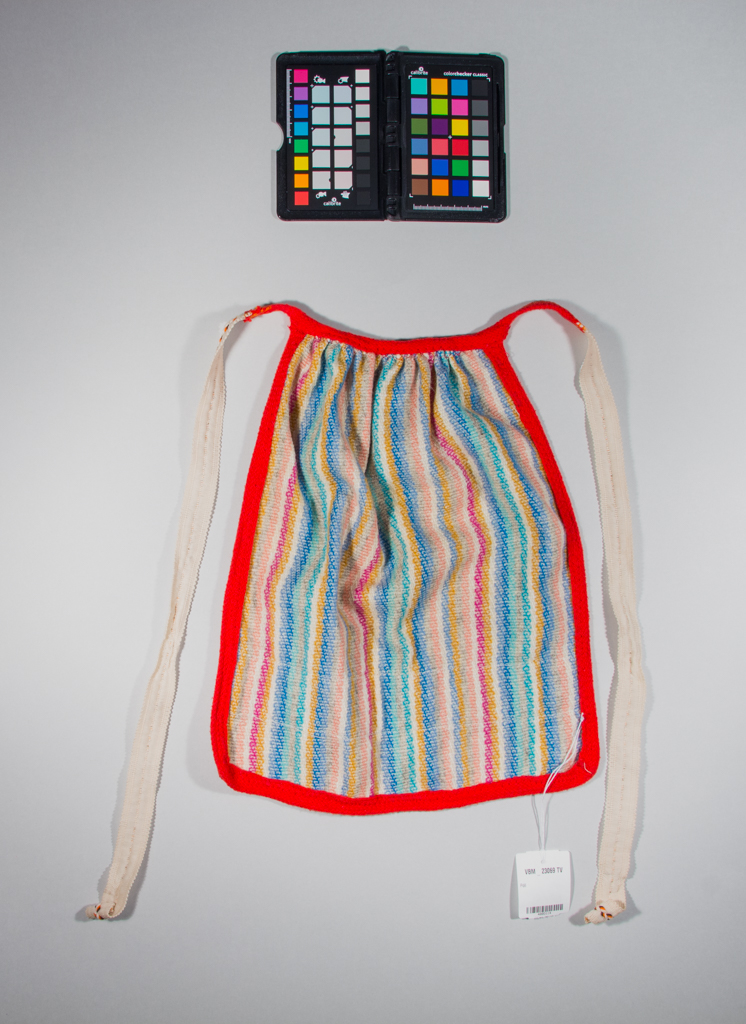
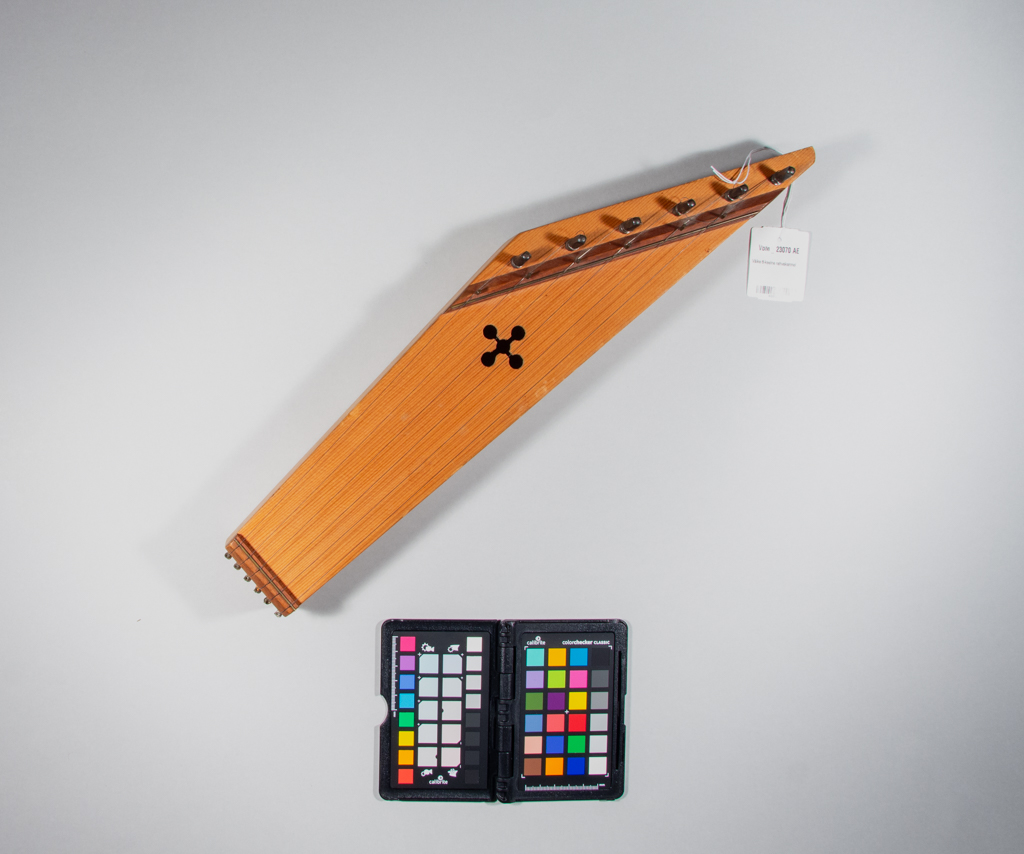
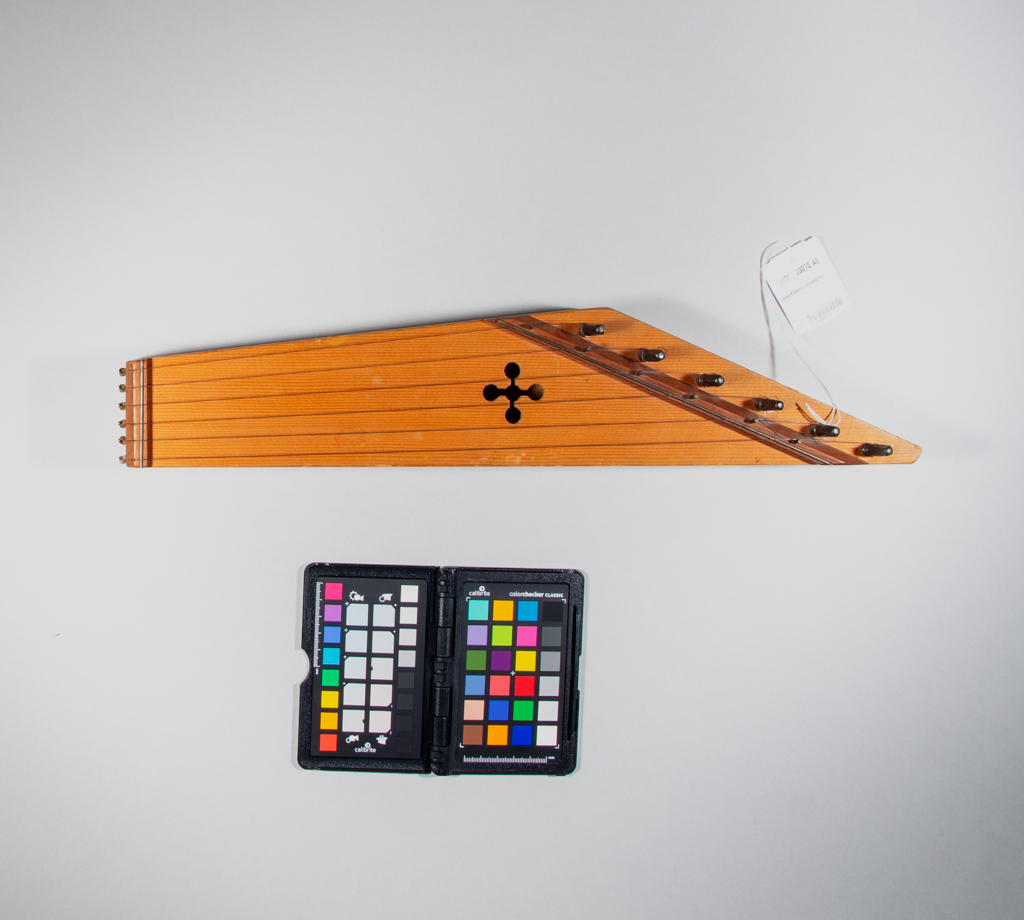
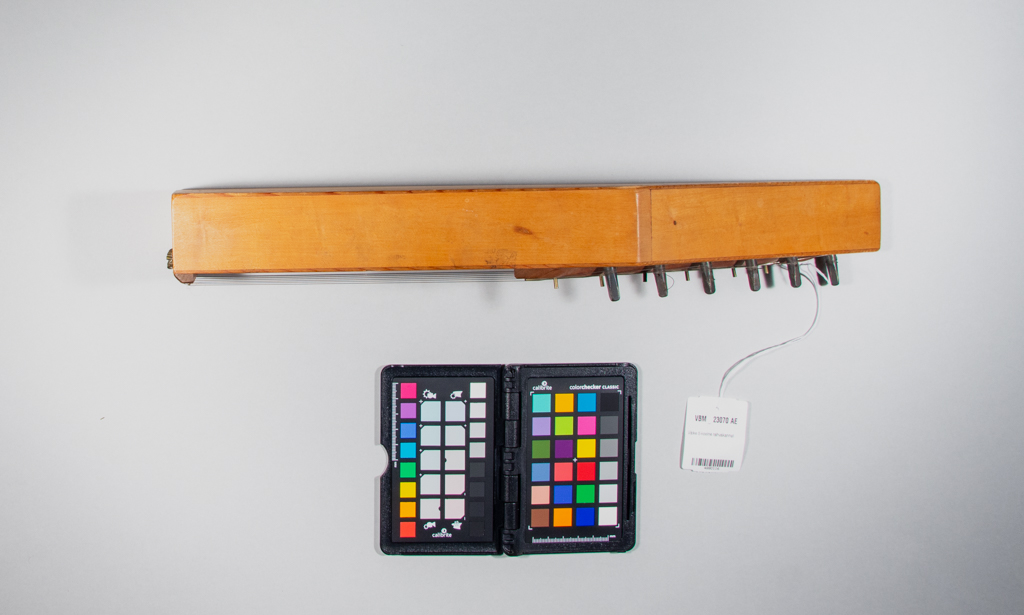
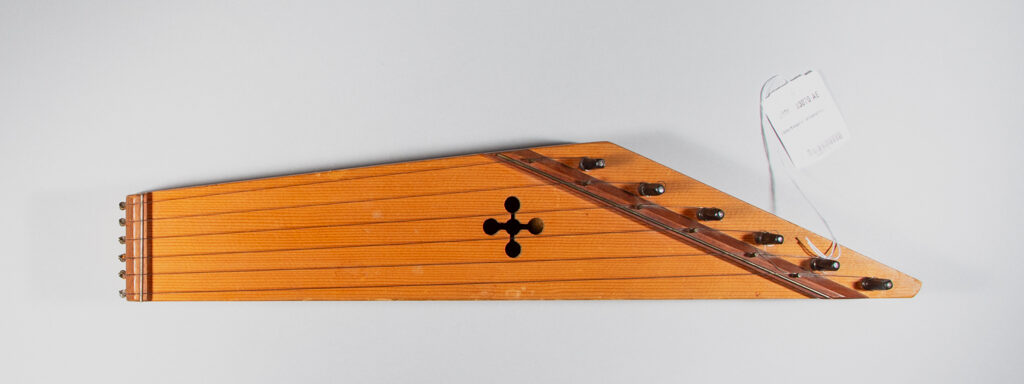
The donation includes a knitted children’s skirt, possibly made by Endla Komi; a striped skirt sewn by Reet’s mother and worn by Reet as a child; and a cotton children’s blouse made by Reet herself at a time when linen fabric was difficult to obtain. Instead of traditional embroidery, she hand-painted decorative patterns onto the blouse using textile paints. The collection also includes an apron and a small six-string folk zither/kannel, later used by Reet’s daughter Leida when she was around five or six years old learning to play.
These objects reflect creativity, resilience, and a deep desire to maintain a connection to Estonia. When traditional materials were unavailable, families found new ways to continue cultural practices- what mattered most was ensuring that traditions lived on.
The Mae family’s donation reminds us that history is preserved not only through official documents or major historical events, but also through hand-sewn clothing, small musical instruments, and the stories families carry across generations.