Back
Back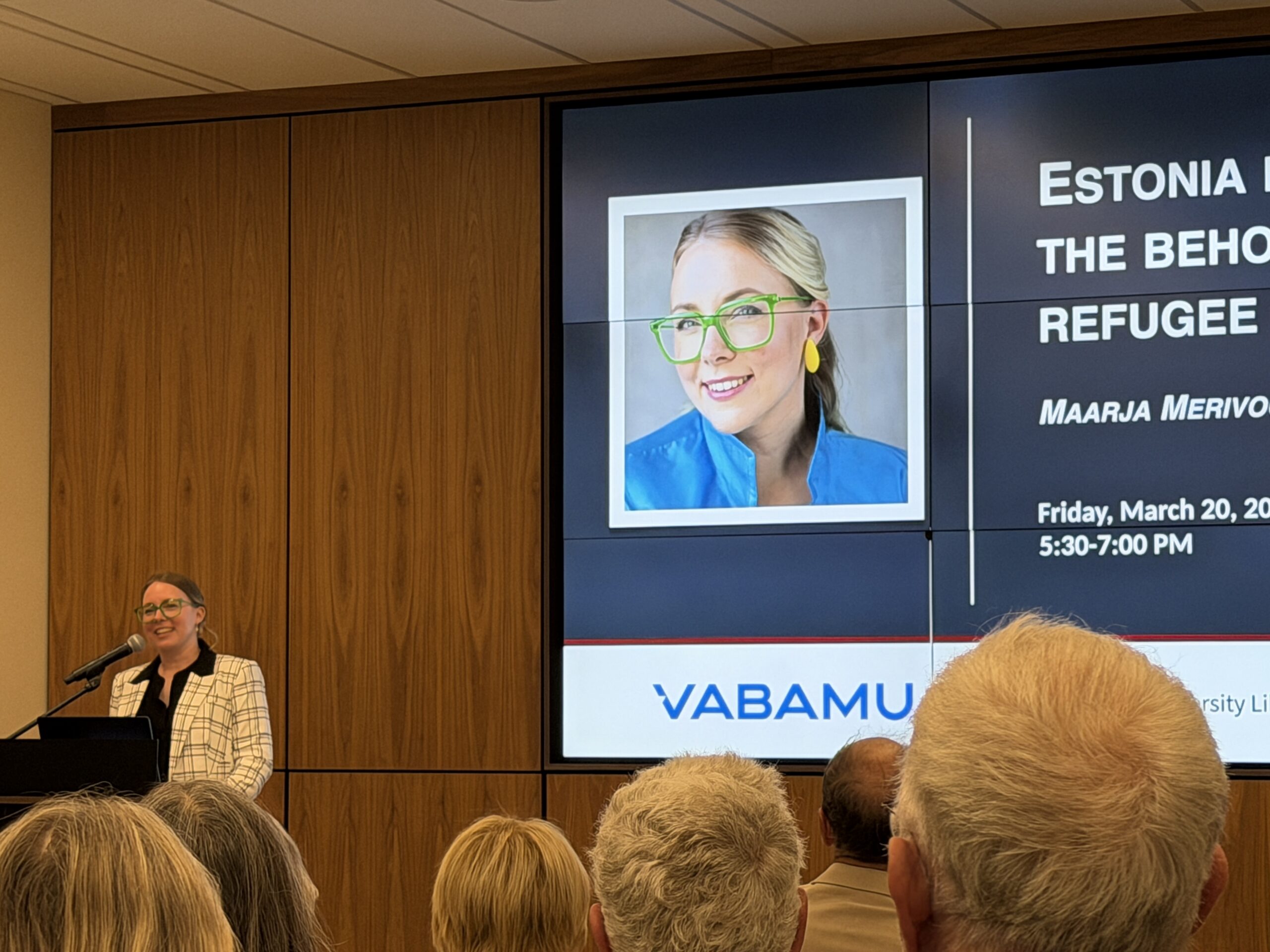
Maarja:
My 8 week fellowship at Stanford was an intense period of research, writing, and dissemination. It was also the warmest winter of my life. I arrived in the Bay Area on a cloudy day in January, but that didn’t take away from the overwhelming feeling of imminent spring in the air. Having just spent a few years doing a postdoc in the subarctic climate and in deep snow, the contrast between my former and future home was indeed stark. Of course, once properly settled in, I did have the frequent pleasure of rediscovering the California Sun, because my deep dives into the archives and library took me on daily pilgrimages underground.
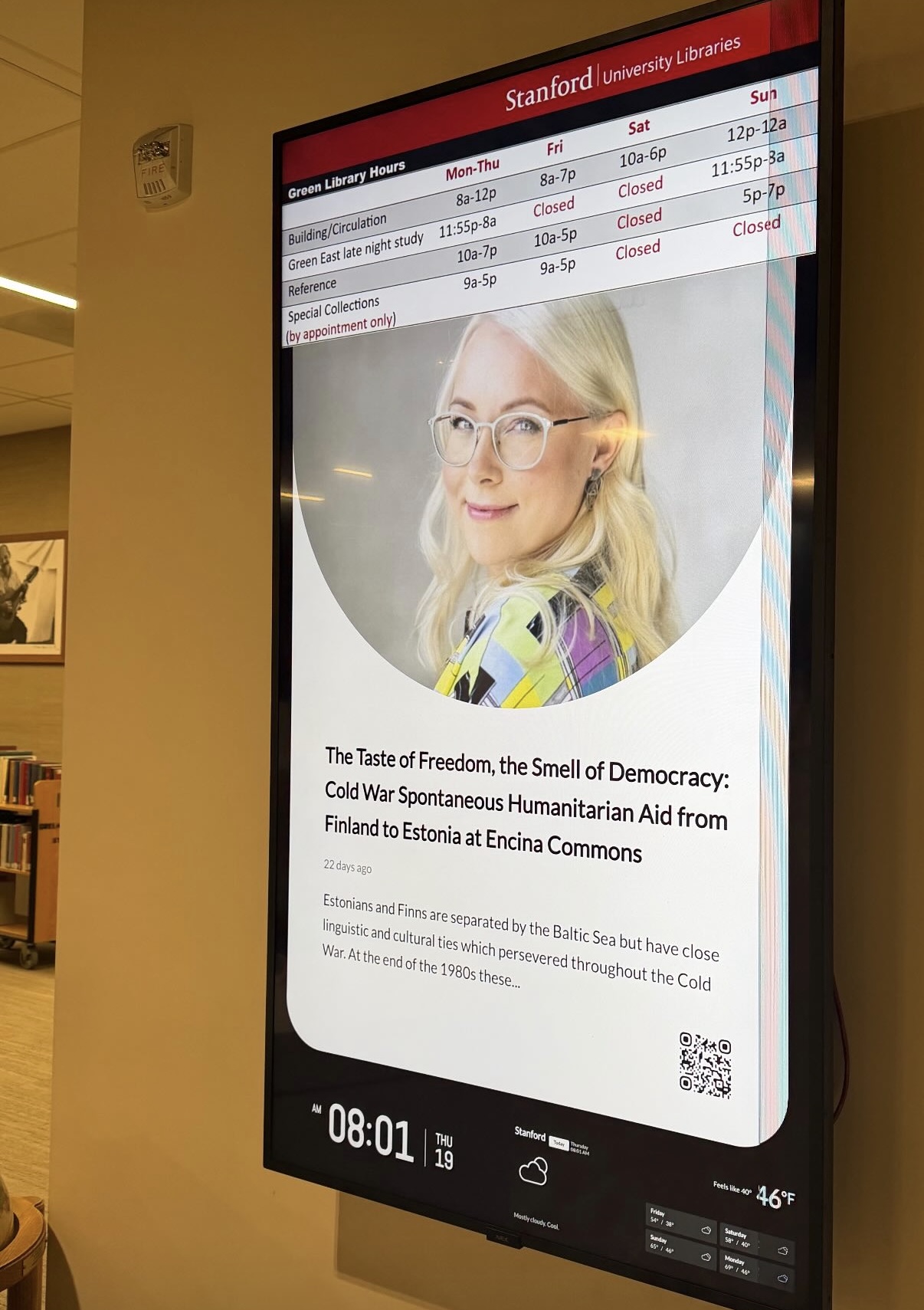
I felt very welcome at Stanford, and was able to have dozens of vibrant meetings with fellow scholars and community members. Stanford staff also organized public speaking opportunities for me to share my research. At the Center for Russian, East European and Eurasian studies seminar series I gave a talk about the Finnish-Estonian connection, grassroot level international relations and diplomacy of the people during the late Soviet era. Green Library hosted a movie night to showcase my recent documentary film about Estonian’s Great Escape to the West in 1944 and subsequent years in German Displaced Persons’ Camps. I was also pleasantly surprised by an opportunity offered by the library to lead a conversation about game culture in the Baltic Sea space during the long twentieth century.
In addition to academic contacts I also had many warm encounters with the American Estonian community. 2026 will forever stay in my mind as the year where I got to celebrate Estonia’s Independence Day not once, not twice, but three times! First I was flown up to Portland, Oregon to take part in the community celebrations, give a speech and show my films. I was also treated to a fascinating exhibition related to the 75 year anniversary of the Portland Estonian Society. After flying back to San Francisco, I got to deliver the keynote speech at the Bay Area Estonian’s Independence Day celebrations, as well as attend a smaller gathering in a welcoming home dedicated to the very same historic event. At the 15th anniversary of the San Francisco Estonian language club, I got to present about the early history of the Estonian diaspora from the 17th to the 19th century. All of the Estonian events came with delicious potlucks that always featured bread, which elated me as a notoriously bread-minded person.
In addition to exploring the West Coast, I was also able to have a short trip to the East. At the time of my visit New England had just experienced a major snowstorm and I saw Boston and Providence in a truly historical setting – amid mounds and piles of snow, some of which were taller than I was. Brown University hosted my art project investigating the interplay between longing and belonging, as well as the materiality of real and imaginary borders. By combining smells, memories of smells, and artistic iterations of both, my exhibition looked at how people living under political occupation imagine freedom and democracy smell like.
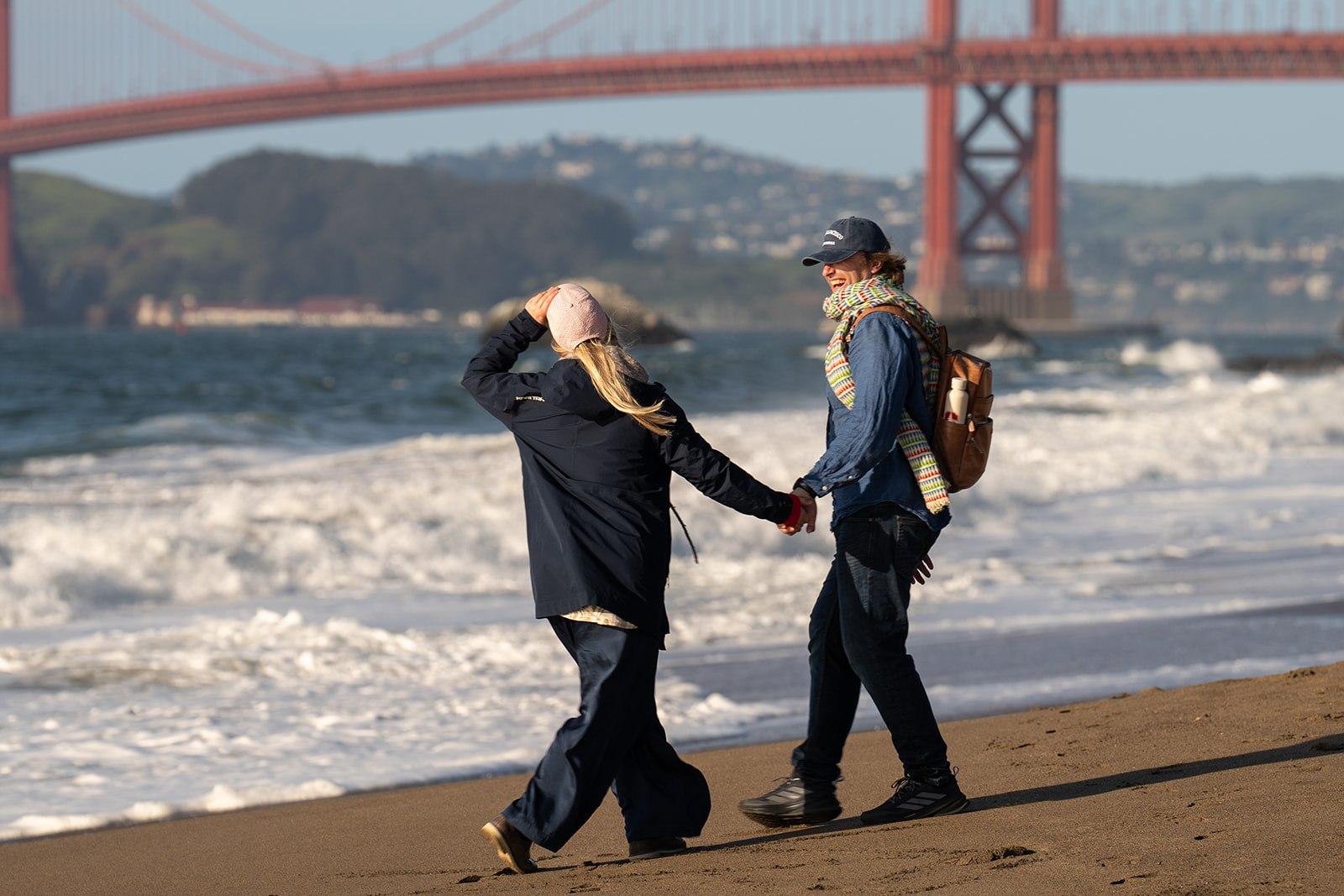
I often spent my Saturdays in San Francisco exploring the various neighborhoods and cultural layers of that historic city. In Palo Alto, however, I often found myself heading for the golden era cinema called Stanford Theater. They mostly show black and white classics there. During the intermission an organist playing the Wurlitzer is lifted from under the stage. This establishment has the air of a place where time stands still, and is home to Americana in its finest. However, the true marvels I encountered during my sojourn were of course the giants that I was able to meet in the wild: the redwood and sequoia trees in Yosemite National Park, and the whales and sea lions in Monterey Bay.
All in all I can say that my January to March visit was a whirlwind of research, anthropological observation, networking, and insight. It gave me a fresh perspective on the United States of America, as well as a whole new direction for my career. Serving as visiting scholar has in my case been truly life changing.